
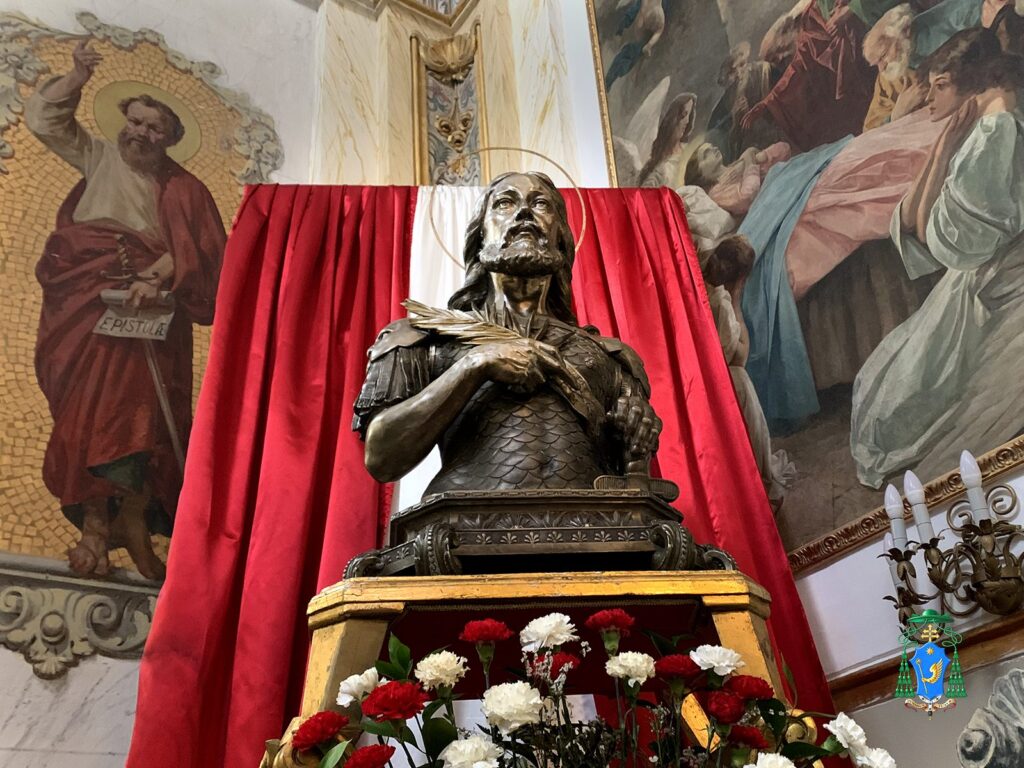
Saint Agathius,
the soldier of the faith who did not renounce Christ
Among the lesser-known yet deeply significant figures of the Christian tradition stands Saint Agathius, also known as Acacius, a martyr and witness to an unshakable faith. A native of Cappadocia and a centurion in the Roman army stationed in Thrace during the early 4th century, Agathius lived in an era marked by the persecution of Christians, choosing to remain faithful to Christ even at the cost of his own life.
According to tradition, he was denounced for his faith by the tribune Firmus and the proconsul Bibianus during the persecutions instigated by the emperors Diocletian and Maximian. Subjected to unspeakable torture and suffering, Agathius never yielded to pressure nor renounced the Gospel. His martyrdom culminated in his beheading in Byzantium on May 8, 303, making him a symbol of courage, perseverance, and total trust in God.
After his death, devotion to him spread rapidly across various regions of the Empire. At least two churches in Constantinople were dedicated to him, and his cult also became deeply rooted in Calabria. The saint’s relics are housed in the Cathedral of Squillace, while one of his arms was transferred in 1584 to Guardavalle, a town that has adopted him as its patron saint. Other relics are also preserved in Spain, in Cuenca and Ávila.
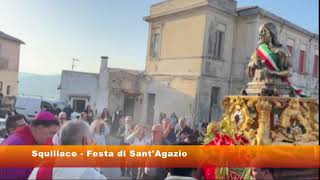
To this day, the city of Squillace celebrates two solemn occasions in his honor with great devotion: January 16, the feast of the Translation of the Relics, and May 7, the commemoration of his martyrdom, events that draw the faithful and pilgrims together in an atmosphere of deep spirituality and tradition.
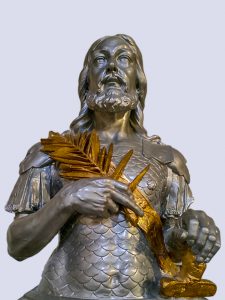
In Christian iconography, Saint Acacius is depicted as a Roman soldier, clad in armor and bearing a spear and shield, while holding the palm and cross of martyrdom. He often appears beside a walnut tree, a symbol linked to the tradition that he was suspended from such a tree to be scourged.
Culinary tradition also preserves the memory of the saint through the famous “Pitta di Sant’Agazio,” a traditional Calabrian pastry made with walnuts, raisins, and dried fruit. It is a flavor that blends faith, memory, and popular identity, passing down through the centuries a devotion to a saint who, though little known, remains a shining example of Christian fidelity and hope.
The figure of Saint Acacius continues to speak to the modern world. His example reminds us of the importance of standing firm in our convictions, facing difficulties with courage, and bearing daily witness to Gospel values through love, truth, and fraternity. His life teaches that faith is not merely a personal choice, but a journey to be lived in community, supporting one another through times of trial.