
Monuments of Squillace
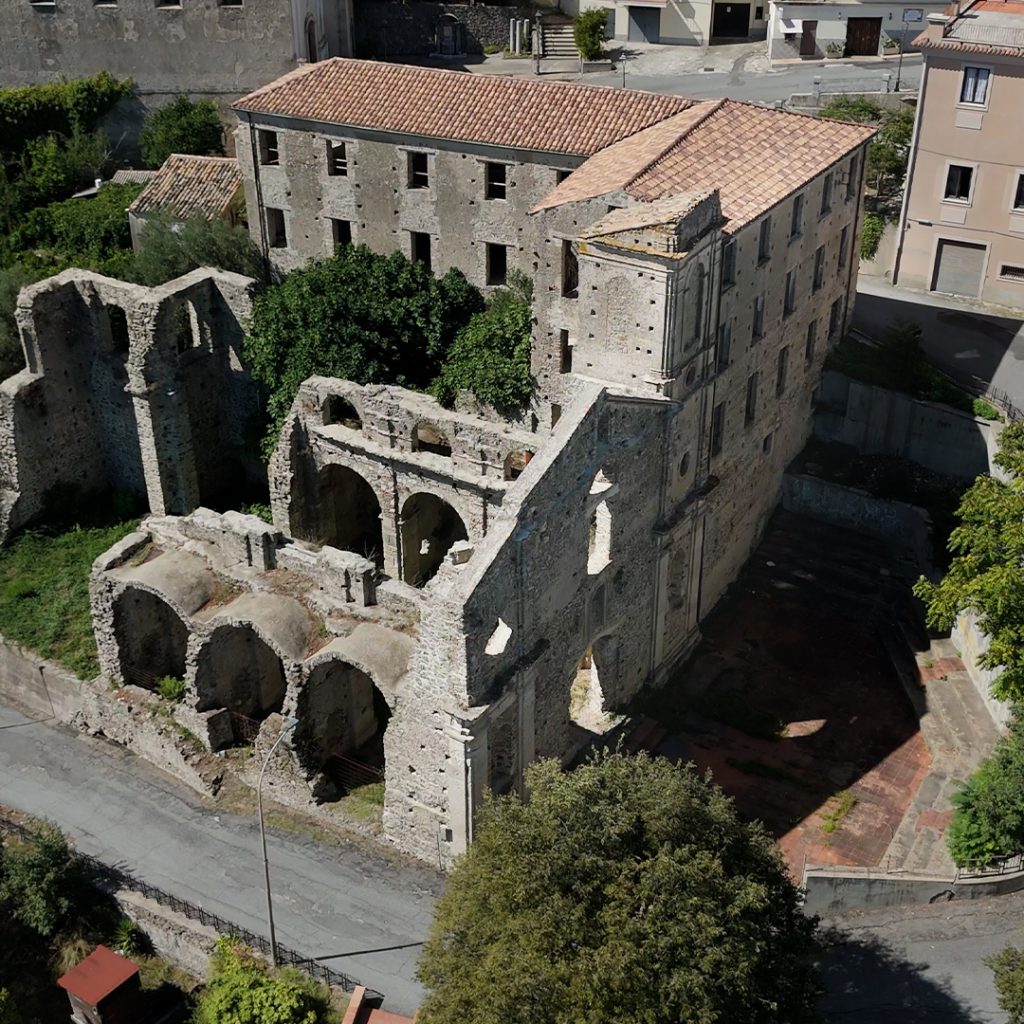
Chiesa e Monastero di Santa Chiara
Below Piazza Duomo, the ruins of the Church of Santa Chiara and its adjoining monastery draw the eye. Built in 1604 using a bequest from the nobleman Marcello Menniti of Guardavalle, the complex originally housed sixteen nuns who observed the strict rule of Clare of Assisi. Just under two centuries later, in 1783, an earthquake brought about the monastery’s demise. Today, all that remains is the distinctive façade—adjacent to the church entrance, with a majestic bell tower rising to its right—and, inside, the *matroneo* (women’s gallery) situated above the side arches. Light streaming through the large window in the center of the façade helped to alleviate the interior gloom.
Chiesa di San Giorgio
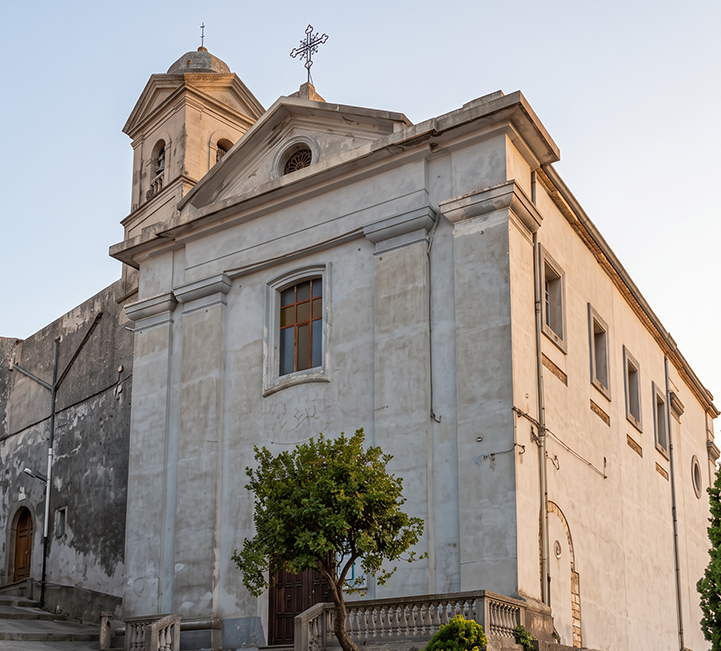
The Church of San Giorgio Martire, known locally as the Church of the Purità (Purity), derives its traditional name from the Salesian convent founded in 1713, for which it originally served as the chapel. It was consecrated in 1739 by Monsignor Michele Abbate in honor of the Blessed Virgin Mary of Purity. Between 1785 and 1798, it housed the parish of San Giorgio after the original church was damaged in the 1783 earthquake.
Situated in an elevated position within the historic center, the church features a simple rectangular façade with pilasters, a portal topped by a stained-glass window, and a small pediment. The interior consists of a single nave with a barrel vault, a domed presbytery, and marble altars set into side niches. A square bell tower, distinguished by paired arched windows and small pediments, connects the church to the adjoining Capuchin convent.
Chiesa di San Pietro
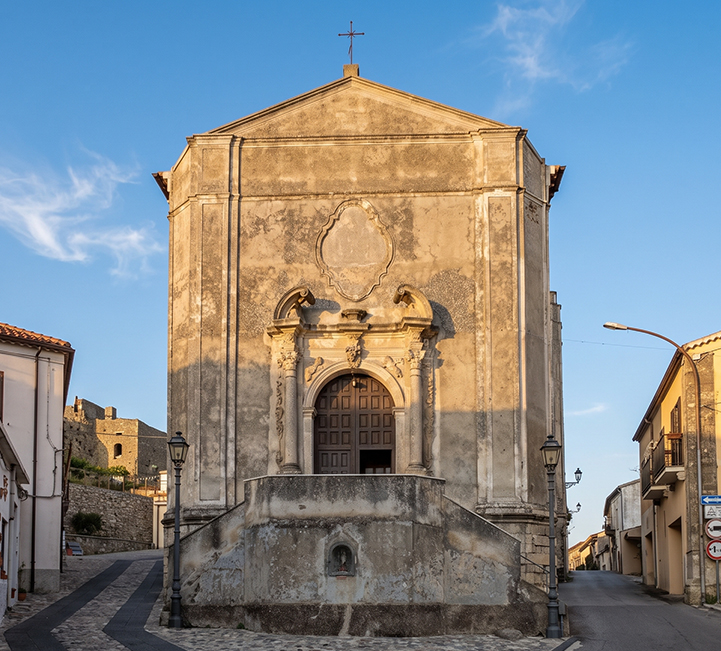
Once the seat of the Confraternity of Santa Maria del Carmelo, and still known today as the Church of the Carmine, it became a parish church following the earthquake of 1783. The church boasts a façade featuring an intricately carved 18th-century stone portal, flanked by two imposing columns. This beautiful 18th-century portal, restored in the 1980s, leads into a simple yet evocative building with a single-nave layout and a wooden ambo situated to the right of the transept that sets off the altar. The parish’s original location was in the upper part of the city, specifically, in the area below the Castle, along the route connecting to the Cathedral.
Chiesa dell’Immacolata
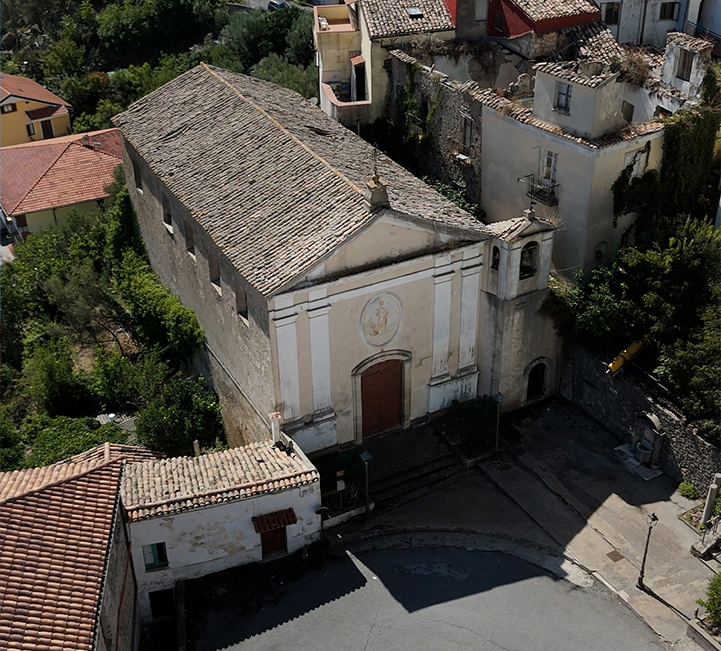
riginally established as the “Church of the Immaculate Conception” (*Chiesa dell’Immacolata*), it was built for the Confraternity of the Immaculate Conception around the mid-16th century. It remained under the Confraternity’s ownership until 1783, when, following an earthquake, the seat of the San Nicola delle Donne parish was transferred there. In 1971, that parish was permanently relocated to Squillace Lido, and the church subsequently became a subsidiary of the Cathedral. Situated in Squillace’s historic center and surrounded by taller residential buildings, the church stands facing a wide, rising street that leads to Piazza del Duomo. Its main gable-roofed façade, crowned by a large pediment, is articulated by pairs of fluted pilasters rising from bases; in the center, an entrance portal, constructed of rectangular stone blocks and raised four broad steps above street level, is surmounted by an oval feature. The bell tower is attached to the structure but projects slightly beyond the façade; it is accessible from both inside and outside the church (via a small stone doorway opened in 1984). The interior consists of a rectangular hall featuring a barrel vault, which is interrupted along the sides by the splayed recesses of stained-glass windows, although the windows on the right-hand side are “blind” (sealed). A barrel-vaulted crypt is located in the lower section.
Chiesa di Tutti i Santi
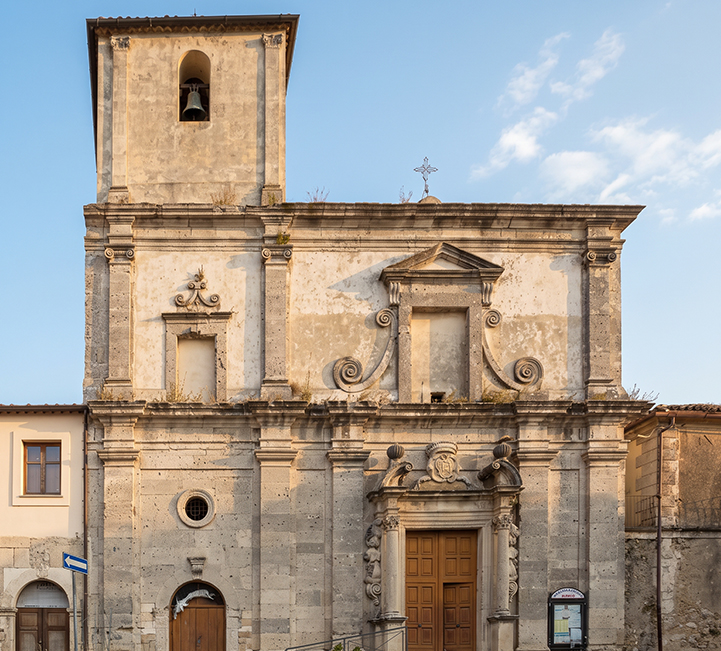
Second half of the 16th century – The church (formerly the parish church of San Matteo) is distinguished by its unique Renaissance-style façade, rebuilt in 1717 and featuring two busts of bare-breasted women. Above the portal, the coat of arms of the Franciscan Order depicts the bare arm of Christ alongside the robed arm of Saint Francis. The Convent of All Saints (Monastero di Tutti i Santi) once stood adjacent to the church but was completely destroyed by the earthquake of 1783. The interior houses interesting paintings by the 19th-century artist G. Basile.